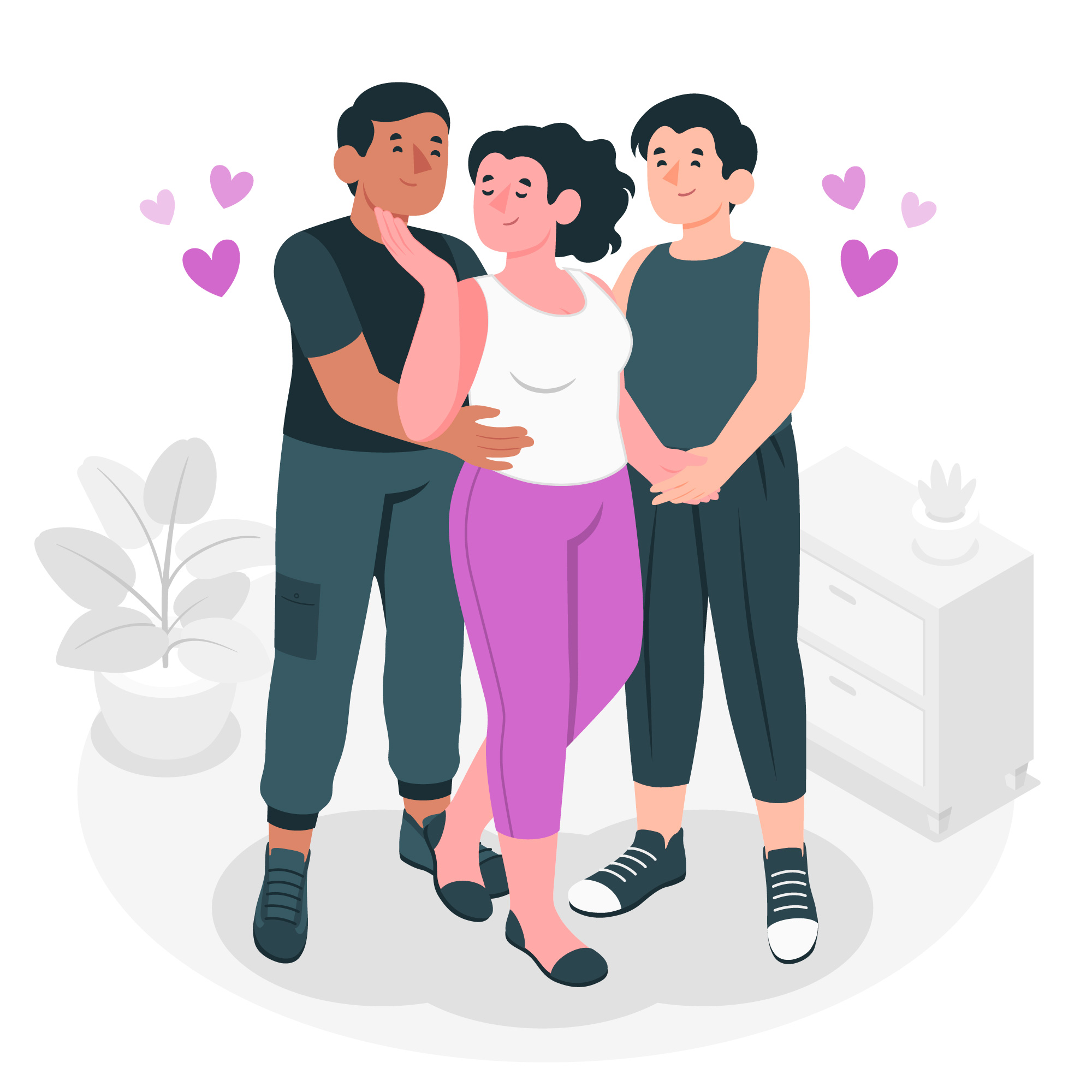
Can Having A Lover On The Side Make Me A Better Wife?

My lover makes me feel good, and that’s good for my marriage.

For many people, the idea sounds like a contradiction. How could a woman become a more attentive, engaged wife while maintaining a connection outside her marriage? Yet across relationship communities and personal accounts, some women are beginning to describe exactly that experience, not as a breakdown of commitment, but as a shift in how they feel and function within their marriage.

Marriage has traditionally been framed as the place where emotional, physical, and psychological needs are meant to be fulfilled by one person alone, and anything outside of that is often assumed to signal that something is missing or broken. That assumption has shaped how people define loyalty, intimacy, and even what it means to be a “good wife.” However, the experiences being shared by some women suggest a more nuanced reality, one where the presence of an outside connection does not necessarily compete with the marriage, but can, under specific conditions, influence how a woman shows up within it.

At the center of these conversations is not simply attraction, but presence. Long-term relationships naturally evolve into patterns of familiarity where routines, responsibilities, and predictability begin to take priority over emotional engagement. The relationship may still be strong, but the feeling of being actively seen, desired, and fully attended to can become less noticeable. This shift rarely announces itself. It settles in gradually, becoming part of the background of everyday life until connection feels stable, but no longer vivid or intentional.

In this context, some women describe an outside connection as a catalyst rather than a replacement. What changes is not their level of love for their partner, but their connection to themselves. Feelings such as confidence, attentiveness, and emotional responsiveness begin to resurface, along with a renewed awareness of how they carry themselves and how they engage in moments of connection. That internal shift often translates directly into how they return to their marriage, bringing more energy, more focus, and a greater sense of intentionality into their role as a wife.

This is where the idea becomes more clearly defined. For some women, the experience is not about seeking something better, but about rediscovering a version of themselves that had quietly faded. When that awareness returns, it often changes how they communicate, how they listen, and how they connect with their partner. They may find themselves more attentive, more emotionally available, and more engaged in ways that feel natural rather than forced. In that sense, the claim that it can make them a “better wife” is not about comparison, but about how they show up within the relationship after reconnecting with that part of themselves.

That shift does not remain isolated. Many women describe how it carries back into their marriage in subtle but meaningful ways. Interactions feel less routine, attention becomes more deliberate, and connection feels more immediate. The relationship itself has not changed in structure, but the experience of it becomes more vivid. In practical terms, this can look like more intentional communication, increased attentiveness, and a stronger emotional presence with their partner, all of which contribute to how they define themselves within the relationship.

It is also important to understand that these experiences exist within a range of different relationship structures, each with its own boundaries and expectations. In what is often referred to as a Hotwife dynamic, a married woman may engage with other partners with the knowledge and consent of her spouse, typically within clearly defined guidelines that prioritize the primary relationship. A closely related variation, known as Stag and Vixen, often involves shared awareness and, in some cases, mutual participation, reinforcing openness rather than secrecy. Polyamory expands this further by allowing multiple emotional or romantic relationships to exist simultaneously, all grounded in transparency and communication. Less structured arrangements, such as friends with benefits, may involve external connections without deeper emotional involvement, yet still introduce a shift in awareness and interaction.

While these lifestyles differ in structure, they share a common thread. They challenge the idea that connection, desire, and engagement must exist in only one place, while also requiring a higher level of awareness and communication than many traditional relationships ever demand. For couples who explore these dynamics successfully, the focus is not on replacing the marriage, but on understanding how to remain more connected within it over time.

What is often misunderstood is that these dynamics are not solutions for struggling relationships. Entering any of these lifestyles without a strong foundation tends to amplify existing issues rather than resolve them. Couples who navigate these dynamics successfully consistently emphasize the importance of ongoing communication, not occasional check-ins, but real conversations about boundaries, expectations, and emotional comfort. Trust must already exist at a high level, and both partners need to feel secure in the relationship before introducing anything external.

Equally important is emotional awareness, particularly when it comes to jealousy. It is not something that disappears simply because a relationship is labeled as open. Instead, it must be acknowledged, understood, and managed through honest dialogue. When handled with awareness, it can lead to deeper understanding between partners and a clearer sense of what each person needs to feel secure. When ignored, it tends to surface in ways that disrupt the very connection couples are trying to strengthen.

Another common misconception is that these dynamics are primarily driven by physical desire. While attraction may play a role, many women describe the experience as being more about emotional and psychological engagement. It is the feeling of being fully present in a moment, of having someone’s undivided attention, and of reconnecting with a sense of self that may have been overshadowed by routine. When that awareness is brought back into the marriage, it often translates into more intentional communication, deeper attentiveness, and a stronger emotional connection with their partner, reinforcing the idea that the change is less about the external connection and more about how it influences the relationship at home.

The idea that having a lover on the side can make someone a better wife is not a universal truth, nor is it a path suited for every relationship. However, for some women, the experience highlights something important. When they feel more connected to themselves, more aware of their presence, and more engaged in their interactions, it directly affects how they show up within their marriage. In those cases, the change is not about the other person, but about how that awareness reshapes their role within the relationship.

Ultimately, the conversation is less about the presence of another person and more about the quality of connection within the marriage itself. For some couples, exploring alternative dynamics brings that awareness into focus in a way that feels immediate and difficult to ignore. For others, the same realization may come through reflection, communication, or a renewed effort to reconnect within the relationship they already have. In either case, what defines the outcome is not the structure of the relationship, but the strength of its foundation and the willingness of both partners to remain engaged with each other over time.

Exploring Polyamory: Nurturing Relationships through Boundaries, Compersion, and Jealousy Management

In recent years, polyamory has gained significant recognition and sparked lively conversations about the possibilities and complexities of non-monogamous relationships. While it might not be everyone’s cup of tea, polyamory can offer a fulfilling and character-building journey for those who are open to exploring it. This blog post will delve into the world of polyamory, discussing the importance of boundaries and limits and shedding light on concepts like compersion and jealousy management. Additionally, we will review some of the pros and cons associated with practicing polyamory.

Understanding Boundaries and Limits:

At the heart of any successful polyamorous relationship lies the establishment and respectful adherence to boundaries and limits. Boundaries act as personal guidelines in each individual’s journey, defining what makes them comfortable or uncomfortable within the relationship. They are crucial for maintaining trust, emotional well-being, and open communication among all partners involved.

Setting boundaries may include a wide range of factors such as physical intimacy limitations, exclusivity agreements, time management, privacy concerns, or personal values and beliefs. Each partner must clearly express their boundaries, while ensuring active listening and empathy for others’ needs. Regular check-ins and open discussions about boundaries are key to maintaining a healthy polyamorous dynamic while respecting individual autonomy.

Exploring Compersion: Finding Joy in Your Partner’s Happiness:

Compersion, a term often associated with polyamorous relationships, signifies the experience of finding joy in witnessing your partner’s happiness and fulfillment in their connections with others. Unlike jealousy, compersion allows one to embrace and appreciate their partner’s additional relationships, fostering a spirit of support and love rather than competition.

Practicing compersion requires building trust and open communication channels with all partners involved, as well as examining any underlying insecurities or fears. It promotes a mindset of abundance rather than scarcity, recognizing that love and connection can be experienced and shared without diminishing one’s own worth.

By practicing healthy boundary-setting, embracing compersion, and managing jealousy, partners can nurture thriving and fulfilling polyamorous connections. (image: Freepik.com)

Managing Jealousy:

Jealousy is an emotional response that may naturally arise within any relationship, monogamous or polyamorous. In the context of a polyamorous relationship, jealousy can be complex and intensified due to multiple relationships. However, it is crucial to remember that jealousy is not inherently bad but rather a signal for underlying emotional needs that require attention and nurturing.

Managing jealousy in polyamory demands introspection and a willingness to confront and communicate insecurities, fears, and triggers. Honest and compassionate conversations with partners can reveal the root causes of jealousy, allowing for the development of specific strategies to address and alleviate these emotions. Practicing self-care, seeking support from understanding friends or therapists, and addressing communication gaps often contribute to moving beyond jealousy towards compersion and emotional growth.

Pros and Cons of Polyamory:

Like any relationship style, polyamory has both pros and cons. Some advantages of polyamory include:

1. Increased emotional support and companionship from multiple partners.

2. Opportunity for personal growth, self-discovery, and enhanced communication skills.

3. The potential to explore diverse emotional and physical connections that align with individual needs.

4. Community-building and expanded social networks through meeting new partners.

However, it is important to acknowledge potential challenges, including:

1. Time management and scheduling complexities.

2. Jealousy and emotional turbulence, requiring introspection and continuous communication.

3. Navigating societal stigmas and judgment from others who may not understand or accept polyamory.

4. Balancing individual needs within established boundaries and limits.

Polyamory can offer individuals the opportunity to experience profound personal growth, intimate connections, and a unique exploration of love and relationships. By practicing healthy boundary-setting, embracing compersion, and managing jealousy, partners can nurture thriving and fulfilling polyamorous connections. While considering the pros and cons, it is essential to remember that the success of any relationship, regardless of its style, ultimately lies in clear communication, respect, and ongoing commitment to the happiness and well-being of all involved.

Categories: Polyamory Tags:

Open Relationships: What is it?

What is an open relationship? Open relationships and open marriages are becoming more common and accepted in today’s society so, what is it all about? An open relationship is a non-monogamous romantic relationship where both partners agree to have sexual and/or romantic relationships with other people outside of the relationship. In an open relationship, partners have the freedom to pursue connections with others while maintaining a primary relationship with each other. This type of relationship can take many forms, from casual dating to long-term committed relationships with multiple partners.

Open relationships are based on the principles of honesty, communication, and mutual consent. Both partners must be honest about their desires and intentions and communicate openly about their boundaries and expectations. Consent is also crucial, and both partners must agree to the arrangement and the terms of the open relationship.

Open relationships can offer several benefits, including the freedom to explore different relationships and sexual experiences, increased emotional connections with multiple partners, improved communication skills, and personal growth. However, open relationships can also present challenges, such as jealousy, insecurity, and the potential for misunderstandings or hurt feelings.

It’s important to note that open relationships are not for everyone and should only be pursued if both partners are comfortable with the arrangement. Open relationships require a high level of trust, communication, and mutual respect, and both partners must be committed to maintaining the primary relationship while pursuing connections with other partners. This type of relationship style can take different forms, including swinging, hotwife, and polyamory.

Overall, open relationships offer a unique and non-traditional approach to romantic relationships that can be fulfilling and rewarding for those who are interested in exploring non-monogamous connections. While open relationships can be rewarding and fulfilling, they can also come with challenges and potential pitfalls. Trust is also a crucial aspect of open relationships. Both partners need to be open and honest about their actions and feelings, and they must trust each other to do what they say they will.

When shouldn’t enter an open relationship?

Open relationships are not for everyone, and there are some circumstances where it may not be appropriate to enter into an open relationship. Let go over some reasons why someone may not want to enter an open relationship.

Lack of interest is one of many reasons you should not to enter an open relationship. The desire to be in an open relationship must be mutual between both partners. If one partner is not interested in exploring non-monogamous relationships, it’s best to avoid pursuing an open relationship. If you have issues with insecurity, do not enter open relationship. Open relationships require a high level of trust, communication, and mutual respect. If one or both partners have insecurities or trust issues, it may not be the best time to pursue an open relationship. Emotional baggage should be addressed and even include support or counseling. If one or both partners have unresolved emotional baggage or past traumas, they may not be emotionally ready to engage in an open relationship. You should not enter in an open relationship if you feel pressured from society or peers. Entering into an open relationship because it’s trendy or because friends or society pressures you to do so is not a good reason to pursue an open relationship. Expectations of a quick fix is another reason you should refrain in exploring this type of lifestyle. Open relationships require a lot of work, communication, and emotional maturity. If someone is entering an open relationship with the expectation that it will fix existing problems in their relationship, they may be disappointed.

Entering an open relationship is a personal decision that should be based on mutual desire, if any of these factors are missing, it may not be the right time to enter into an open relationship. It’s essential to approach open relationships with open communication and a willingness to work together to establish clear boundaries and rules that work for both partners.


Hotwifing is a non-monogamous sexual practice where a married woman has sexual relationships with other men, with the full knowledge and consent of her husband.

Benefits of Open Relationships

Open relationships can offer several benefits to partners who are interested in exploring non-monogamous relationships. Here are some of the potential benefits of open relationships:

  1. Sexual Exploration: Open relationships allow partners to explore their sexual desires with multiple partners, which can be a source of excitement and variety.
  2. Emotional Connections: Open relationships can offer emotional connections with multiple partners, allowing for more profound and diverse relationships.
  3. Freedom and Autonomy: Open relationships offer partners the freedom to pursue their desires and autonomy in making choices about their relationships.
  4. Improved Communication: Open relationships require high levels of communication and transparency, which can lead to improved communication skills and stronger emotional bonds.
  5. Jealousy Management: While jealousy can be a challenge in open relationships, managing it can lead to increased emotional intelligence and personal growth.
  6. Improved Sexual Health: Open relationships require regular STI/STD testing and safer sex practices, which can lead to improved sexual health and safer sexual practices overall.
  7. Relationship Enrichment: Open relationships can add new dimensions and excitement to a primary relationship, leading to improved relationship satisfaction and enrichment.

It’s important to note that the benefits of open relationships are highly dependent on the individuals involved and the specific dynamics of the relationship. Open relationships require careful communication, mutual respect, and clear boundaries to ensure that all parties are comfortable and fulfilled.

Challenges in Open Relationships

There are many challenges that come with open relationships, and partners considering this type of arrangement should be aware of them. Below is a list of some of those challenges couples might experience.

  1. Jealousy: Perhaps the most significant challenge of open relationships is managing jealousy. Even in the most secure and loving relationships, jealousy can arise when one partner feels threatened or neglected by the other’s involvement with another person. It is essential to communicate openly and honestly about feelings of jealousy and work together to find ways to manage it.
  2. Communication: Open relationships require a higher level of communication than traditional monogamous relationships. Partners must be able to talk openly and honestly about their desires, boundaries, and expectations to avoid misunderstandings and hurt feelings.
  3. Time Management: Managing multiple relationships takes time and energy, which can be challenging for partners who already have busy lives. It’s essential to communicate effectively and set boundaries around how much time is spent with each partner to ensure that everyone’s needs are met.
  4. STI/STD risks: Engaging in sexual activity with multiple partners increases the risk of contracting sexually transmitted infections (STIs). Partners in open relationships must be vigilant about practicing safe sex and getting tested regularly to protect themselves and their partners.
  5. Social Stigma: Open relationships are still stigmatized by society, and partners may face criticism or judgment from family, friends, and colleagues. It is essential to be prepared for potential negative reactions and to have a support system in place to navigate them.
  6. Power Imbalances: In some open relationships, one partner may have more partners or more significant emotional connections than the other, which can lead to power imbalances and feelings of insecurity or resentment. It is crucial to establish clear boundaries and expectations around emotional connections and prioritize open and honest communication to avoid this.

Pitfalls of Open Relationships

While open relationships can be fulfilling, they can also come with potential pitfalls. One of the most significant pitfalls is the potential for hurt feelings and misunderstandings. It is essential for partners to establish clear boundaries and communicate their needs and expectations to prevent misunderstandings. Another potential pitfall is the risk of sexually transmitted infections (STIs) and unwanted pregnancies. Partners must be responsible and take necessary precautions to protect themselves and their partners.

Some types of Open Relationships

There are different types of open relationships, and here are some of the most common:

Polyamory is a type of open relationship where partners have romantic relationships with multiple people, with the full knowledge and consent of all parties involved.
  1. Swinging: This is a type of open relationship where couples engage in sexual activity with other couples or individuals. Swinging can take place in a private setting or in a group setting like a swinger’s club.
  2. Hotwifing: This is a form of swinging where the wife has sexual relationships with other men while the husband watches or is not present. It often involves a power dynamic where the husband is submissive and derives pleasure from watching his wife have sex with other men.
  3. Polyamory: This is a type of open relationship where partners have romantic relationships with multiple people, with the full knowledge and consent of all parties involved. Polyamorous relationships can take many forms, from a closed triad (three people in a committed relationship) to a larger polycule (a network of interconnected romantic relationships).
  4. Open Marriage: This type of relationship involves both partners being free to engage in sexual or romantic relationships with other people outside of the marriage. Open marriages may involve casual sexual encounters or more serious romantic relationships outside of the marriage.
  5. Monogamish: This type of open relationship involves partners who are mostly monogamous but occasionally engage in sexual activity with other people with the knowledge and consent of their partner.
  6. Relationship Anarchy: This is a philosophy or approach to relationships that rejects traditional relationship labels and hierarchies. In a relationship anarchist approach, partners have complete autonomy and are free to engage in any kind of relationship they desire.

Setting Boundaries and Rules

Establishing clear boundaries and rules is crucial in any open relationship. This can include setting limits on how often partners can see other people, what activities are allowed, and whether or not emotional relationships are allowed. Both partners must be comfortable with the boundaries and rules, and they must be willing to revisit and adjust them as needed.

Here are some tips for setting boundaries and rules:

  1. Communication: Open and honest communication is crucial when setting boundaries and rules. Both partners should express their desires and concerns, and work together to establish mutually agreed-upon boundaries and rules.
  2. Prioritizing Safety: Safe sex practices and regular STI/STD testing should be a top priority in any open relationship. Agreeing on safe sex practices and testing schedules is crucial to ensuring the physical health of all parties involved.
  3. Emotional Boundaries: It’s essential to establish emotional boundaries and expectations around emotional connections with other partners. This can include agreeing to share emotional experiences with primary partners first, or not pursuing emotional connections beyond physical relationships.
  4. Time Management: Setting boundaries around the amount of time spent with other partners can help ensure that all partners feel valued and respected. Agreeing on how much time can be spent with other partners can prevent feelings of neglect or resentment from arising.
  5. Privacy: Setting boundaries around privacy and social media can help prevent misunderstandings and miscommunications. Discussing how much information can be shared about other partners on social media or with friends and family can prevent discomfort or hurt feelings.
  6. Regular Check-Ins: It’s essential to regularly check-in with each other to ensure that boundaries and rules are being respected and that everyone is comfortable with the arrangement. This can also be an opportunity to revisit and adjust boundaries and rules as needed.

Setting clear boundaries and rules is essential for any successful open relationship. Open communication, mutual respect, and prioritizing safety and emotional well-being can help ensure that all parties involved feel valued and respected in the relationship.

Terminology in Open Relationships

There is a lot of terminology in open relationships, and it is essential to understand the different terms and their meanings. For example, “primary partner” refers to the main partner in the relationship, while “secondary partner” refers to a partner with whom one has a less serious relationship. “Metamour” refers to the partner of one’s partner in a polyamorous relationship, while “compersion” refers to the feeling of joy one experiences when their partner experiences joy with someone else.

Conclusion

Open relationships and open marriages can be a fulfilling and rewarding relationship style, but they require a lot of communication, trust, and honesty. It is essential for partners to establish clear boundaries and rules and to be responsible and respectful of each other’s feelings and needs. While there are potential challenges and pitfalls, the benefits of open relationships can lead to personal growth, self-discovery, and emotional intimacy.

Living Together, Sleeping Arrangements


When Art, Guin, Lance, and I decided to move in together, we had to figure out how we were going to sleep together. No, this is not some poly fantasy where everyone is having sex with each other in a California King bed. Guin and Lance were in the second year of their relationship, and Art and I were in a relationship but I was not in a relationship with Guin or Lance. Our sleeping arrangements had to accommodate the needs of each relationship without impinging on any others. Not an easy feat when we weren’t all involved with each other.

Art felt that he and Guin should have the master bedroom because they were married and had the most things together, and because it would allow both Lance and I to have turns in the master bedroom. The master bedroom was the largest one in the house, on the main floor, has a walk-in closet and a huge on-suite master bathroom with jacuzzi tub. It was much superior to the other bedrooms in the house which were smaller, had less privacy, and no bathroom. Ever the egalitarian, Art wanted the master bedroom to be a communal space that everyone could use.  

Lance felt that the most equitable arrangement was to have us rotate rooms. He wanted Art and Guin to have the master bedroom for three months, then Guin and himself for the next three months, and Art and I to have it the next three months. The room would “belong” to one person while it was their turn and that person’s partner(s) would be able to use it. Guin wanted to be in the master bedroom, and she wanted to accommodate Lance, so she was in favor of this proposal as well.

I thought that Lance’s proposal was ridiculous because who would want to switch rooms every three months? I didn’t really care to have the master bedroom because I liked having my own room, and I paid the least rent. It turns out that Lance was not only uncomfortable sharing the master bedroom with the other couple in the house, but he also did not want to sleep in someone else’s bed. So under his proposal, all three queen sized beds and the rest of the bedroom furniture would be moved to a different room every three months as well.

As is the case of most poly decisions, the person with the greatest discomfort wins. We settled on Lance’s proposal with Art getting the master bedroom first, and we would all switch rooms after three months. Art and I secretly hoped that Lance would realize switching rooms was too much work after settling in and change his mind. As to who would sleep with who, our plan was that Guin and Lance would have three nights together a week, Art and I would have three nights a week, and Lance and I would have three nights on our own while Art and Guin were together. The seventh night would be for us to all be on our own or figure out otherwise. We would need a schedule on the door and a lot of sheets!

It seemed like a pretty good plan, and it was abandoned the moment we settled in.

First, Guin and Lance were on vacation for two weeks when I moved in, so Art and I enjoyed the master bedroom the entire time. When Guin came back from vacation without Lance, should she sleep with Art for two weeks because that’s how long she had been gone? Or should she sleep with him for three days according to our schedule? But the first night Guin was back, she and Art had a fight and we all slept separately. On the second night she was still angry. On the third night their daughter Sage slept with her and he slept with me again. Does he then sleep with her for the next three nights even though according to our schedule it was my turn to sleep with him?

We weren’t sure when Lance was going to come back (he also had a house in Toronto, where he intended to live part of the time), and when he did a few days later, he wasn’t sure how long he was going to stay. On day four we talked about switching beds, but since Lance was going to be away again for another week, Guin wanted to sleep with him for the remaining time. Lance declared that he supported his lover spending nights with her husband, but we all knew that it was a challenge for him. We did not switch beds.

Art and Guin finally got their time together after Lance left. While I had been annoyed when Art and Guin did not sleep together the first night she got back, when it was finally my turn to sleep alone, I was surprisingly emotional about it. I had spent four weeks in the house by this time, and the family was my entire life. Guin was away or at work most of the time, and when she was at home, she wasn’t interested in socializing with me. Sage and Piper adored their father and loved their mother, but they mostly ignored me. Art was in the process of launching a new business, and worked day and night at his new venture. When he wasn’t working we were eating or spending time with the family. I felt lonely, and stressed by the lack of predictability in our sleeping arrangements, the tension between Art and Guin, and my growing resentment over the lack of help I felt around the household chores, which I seemed to be doing the most of. So after a lonely day spent working, studying, cooking, and cleaning, instead of being rewarded with a night with my lover, I had to deal with him sleeping with someone else.

I lay in bed not able to sleep. I could hear Art and Guin’s voices in their bedroom below me. What were they talking about? Lately, they haven’t been agreeing about the chores, or how they should look after the kids. Why does he want to sleep with her anyway? They never have sex. We have sex every day when she’s away. We have amazing sex. I bet he wishes he were having sex with me right now instead of pretending to be intimate with her. The next morning, much to my chagrin, they were still in bed while I made breakfast for the family. Even though I was sleeping with Art regularly, knowing he was in the house sleeping with someone else was still very difficult. 

Two weeks later, Lance had not returned. He had begun a new relationship in Toronto and wanted to spend more time there. Guin spent hours on the phone processing this with him. I had readily given up the master bedroom when Guin came back, but now Guin showed no sign of intending to give up the master bedroom. She had an erratic schedule as a midwife and said that she slept better in the orthopedic master bed. She was not interested in talking about it, like she was not interested in talking about the chores that were assigned to her but which she ignored, or the dinners that I cooked when it was her turn. Art was completely absorbed in his work. I stopped trying to figure out who was supposed to be with who each night, and left it up to Art where he wanted to sleep. It was sort of a game for me to guess who he would choose to sleep with that night, as now we were not on any kind of schedule. 

A few days later, we heard that Lance had decided to break off his relationship with Guin and become monogamous with his new lover.

To be continued. Please “follow” if you would like to get an email notification for new posts. 

Categories: Polyamory Tags:

Living Together, Part 2


The day Guin came back from Scotland, Art and I wanted to make everything ready to welcome her. Because we had been painting, there were paint stains all over the house, in the hallways, the bathrooms, the stairs, the couch, even on the dishes. We scraped and scrubbed every stain so that no speck remained. We washed two loads of laundry, cleaned all four bathrooms, swept and vacuumed, and took out the trash and recycling. We went grocery shopping and bought flowers to put on the table. I took everything that was mine out of the master bedroom and remade the bed with clean sheets and a duvet cover. I wanted to cook a large dinner but Art told me they were going to get back late so made something light instead.

Art came back with Guin around nine o’clock. She had a long journey but was otherwise her normal self: tall, thin, blonde, and very beautiful. Their twelve year old daughter Piper was very excited to show her all the changes we made to the house. First Piper showed her own bedroom, which we had painted a powder blue. “Did you guys have permission to paint this color?” Guin ask skeptically. “The landlord told us no dark colors,” said Piper, “and this is not dark.” She then showed her my room, which we had painted beige and furnished with furniture I bought. “The dressers are massive!” Guin said disapprovingly, “How am I going to get them out when she moves out of here?” She then sat down to the dinner that I had made. But no sooner had she had two bites when something caught her eye on the kitchen counter: a microwave.

Before Guin left, the four adults debated whether or not to have a microwave. Guin was adamantly against it because she was convinced it emitted harmful radiation and promoted bad eating habits. I did not agree and resented the extra work not having a microwave burdened me with, especially since I was doing most of the cooking and cleaning up. Art and Lance were indifferent, but each subtly defended their girlfriends’ position. Art and Guin also had a microwave in their kitchen the year before when they were living in Kingston and used it fairly regularly, so it seemed ridiculous to me that she was so opposed to it for health reasons in the new house. I had brought my old microwave when I moved into the house, so when Guin went on vacation for two weeks, I had no qualms about setting it up in the kitchen and using it to my heart’s content. Art and I debated whether we should remove it now that she was coming back, and decided if she really hated it we’d remove it, but we were not going to be proactive about it.

Boy were we wrong. The moment she saw the microwave, she dropped her fork and burst out, “What is that doing here? I told you NO microwave!” She stormed off to the bedroom and slammed the door. Art followed. From the kitchen I could hear her yelling at him: “Microwaves are toxic! It’s chintsy! None of our friends back in the States have one! When a woman says no, she means no! Why would you test my no?”

“You’re being extreme, Guin,” Art protested. “You were gone, we only used it to heat up leftovers, and the kids didn’t use it at all.”

“All I wanted was to come home to where I felt safe, and you do this to me! I feel violated!”

Art moved the microwave to the garage. I cleaned up the dinner she had abandoned. A few moments later, she threw out into the living room the duvet comforter I had spread out. Art came out clutching his pillow.

“She’s upset.” He said, “Can I sleep with you?”

“No,” I responded. What I meant was, “I did physical and emotional work so that you could spend this night reconnecting with your wife. I want you to go back in there and work this out with her.” What he heard was neither woman wanted to sleep with him that night.

“Fine,” he said, “I’m going to sleep by myself,” and trod off to the basement.

I headed upstairs on my own. Some polycule this is, I thought, each of us sleeping alone.

I was really upset with Guin. Not only had I spent most of the day cleaning and cooking so she could come back to a nice home, but the last two weeks I had taken care of the household,  painted three bedrooms with minimal help from her husband, and gotten up at 6:30 every morning to make healthy lunches for her children. She could have at least had the grace to be upset another time.

We all slept poorly that night. The next morning, I found Art in the study while Guin was in the basement doing her morning meditations.

“How are you feeling?” I asked him.

“Upset and confused,” he said.

“We’re not forcing her to use the microwave,” I complained, “but what’s wrong if we want to use it to heat up our own food? Why does she get to tell us what to do?”

“I think she feels like she’s losing control with our new living situation,” Art said compassionately, “She’ll probably realize that she overreacted and apologize.”

We didn’t see Guin until 3pm that afternoon. And it was her boyfriend, Lance, who offered to facilitate a meeting between all of us.

We began the meeting as we usually do, with a moment of silence to tune in, and going around checking in on how everyone was feeling.

“I’m sorry to hear that the re-entry was not as smooth as we all hoped for,” Lance started.

“Art and I worked very hard yesterday to make everything ready for Guin, and I was disappointed she didn’t appreciate it more.” I said as mildly as possible.

“I think this is a great opportunity for us to learn how to resolve conflicts,” Art said, “It was going to happen sooner or later and it’s good that we can work on this together now.”

Guin sat in a corner of the sofa looking tired and contrite. “I appreciate you guys cleaning the house, and Morgaine for making healthy lunches for the children. It really made me feel at ease while I was away. At the end of my trip I attended the conference for midwives at Findhorn, where we all had our wounds reopened around the trauma of our births, so I think I’m still sensitive because of that.”

Art said, “When we decided to move in together we said that we weren’t going to exert couple privilege. I want everyone to feel like this is their home. So what can we do to ensure that?”

Lance said that he wanted to be a part of decisions, like putting art up on the wall, even though he couldn’t be there right then to help us make those decisions.

Guin consented to having the microwave in the garage on the condition it would only be used to heat up leftovers.

Art said that he would buy some non-ticking clocks to put on the walls because the clocks that I had ordered ticked and bothered Guin.

We all hugged at the end of the meeting and had dinner with the children.

The next day Guin was polite but stayed out of the way. Art came up to my room where I was reading in bed in the afternoon.

“I just had a long walk and talk with her,” he said, lying down on my bed.

“How was it?”

“Frustrating. I’m having a hard time getting through to her. I really think we need to talk to a therapist.”

It was not the first time that his frustrations triggered mine. But it was more than just my frustration at Guin’s behavior. I felt vulnerable, like I wasn’t really wanted there. I felt, how do I put it, as I often do in this relationship, devalued; because the fullness of our connection, as beautiful and significant as it was to me, seemed so little compared to the monolith of their 25 year marriage. When he and I sleep together, we have ecstatic sex, and when we take a break so that he could spend nights sleeping with her, they do not have sex at all; they barely even talk. Yet in his mind, our love is equal to theirs. So no matter how badly Guin behaved, he didn’t love her any less, and no matter how good I was, he didn’t love me more. Where is the justice in that kind of equality?  

But I didn’t say that. I just held him. All my emotions turned into passion and desire for him. Our lovemaking, that day, he said, felt different. He felt as if he were falling into me, letting go of inhibitions and all sense of ego and becoming one. That’s something that astonishes me about him. Whenever I think that we couldn’t possibly be closer, we are.

Cover art by Henri Matisse. “Henry Matisse Family” 

Categories: Polyamory Tags:

Healing from a Poly Relationship

“I feel like my life is a train. I pull into a station, cry for ten minutes, the train goes on, only to stop a few hours later to have another emotional breakdown,” I said to my friend in Chicago. I had been riding this train for six months, ever since my partner’s wife revoked her consent for our relationship. When his wife’s lover left, she declared that she no longer wanted to be poly and therefore he should break up with me. He didn’t do that, which resulted in our relationship being downgraded from that of a beloved live-in partner to a reviled mistress. She was ready to divorce him if he did not leave me, so we took a six month break in order to save their marriage.

Any breakup is difficult and painful, but the nature of the polyamorous relationship made it degrading in a way that was truly soul crushing. Over the two years we were together, he had become an inextricable part of me, a partner I loved deeply and wanted to share my life with. I moved from Philadelphia, Pennsylvania to Windsor, Ontario to become a part of his family, only to be kicked out by the Canadian border agents a few months in. Instead of compassion and help in getting back into the country, I was basically told that that option was now closed because his wife had changed her mind. I felt abandoned and used, like a toy that could be tossed aside once it lost its appeal. Losing her meant to him losing his family, his identity, and a thirty year relationship, while losing me was just losing a girlfriend.

The inequality of this relationship reopened wounds in other parts of my psyche. It stirred my insecurities about race and nationality, that because I was not white or native, I would never be as popular or as loved as the white American children I went to school with. It reminded me of how I wasn’t taken seriously at work because I was young and Asian and female, even though my education and resume were impeccable, and it even brought back the trauma of my Mormon upbringing. All this took place within the larger context of Trump winning the election, and the legitimizing of sexism, racism, xenophobia, and climate change denial (my degree was in environmental studies) across America. Not only was there a Trump terrorizing people like me at the highest level of government, but I also had a Trump in my personal life in the form of my partner’s wife, a figure of monstrous narcissism and entitlement whose motto for our relationship was, “You will not replace me.”

I lost myself in sorrow and felt completely worthless. I would wake up crying at 4am every morning, feeling as if the darkness and silence would swallow me whole. I would burst into tears in the middle of the day, in public and private, feeling constantly as if a disaster was about to happen. I had a hard time eating and exercising dropped to my lowest weight of 102 pounds. I would go to bed as early as nine, only this made me wake up even earlier, starting the cycle of misery all over again. Even more concerning was the cervical dysplasia, for which I was diagnosed last fall and had undergone surgery to remove the low-grade cancerous cells from my cervix. I feared my emotional state was breeding new cancer cells in my body. I imagined my lover at my deathbed wracked with remorse for having killed me with a broken heart. All this while I moved across country in the middle of winter, started a new job, held down sideworking assignments in editing and tutoring, and started a PhD program that piled a mountain of work on my already full schedule.

“I can’t do this anymore,” I sobbed on the phone to my friend, “I’m slowly killing myself. I don’t know how to make it go away.”
“Oh honey,” she said, “You gotta take care of yourself! Get yourself to yoga as soon as possible.”
I couldn’t just go on with the status quo, passively coping with my mental and physical deterioration. If I was going to get better, I needed to fight for my life, and I wasn’t going to get help from my partner. So I went to yoga.

“Stretch your right arm out infront of you, and your left leg out behind you; take five breaths; now pull them in and touch your elbow to your knee.” The instructor was a young Asian woman in grey leotards and a French braid that seemed to relish torturing her students. Fifteen minutes into Vinyasa yoga and I was losing my balance and sweating like a glazed pig. For months, all I wanted to do was contract into the fetal position, therefore, it felt unnatural to open up my body in these long poses. But as I stretched my fingers to the sky, face turned upwards, tear came into my eyes and I thought, more light please, I’m a seedling coming out of the dark ground after the winter. When I finally lay down on the mat, I felt a sense of serenity and groundedness that I hadn’t felt in a long time.

I made a list of all the things that would help me be happier: food, exercise, nature, friends, lovers, and avoiding contact with the source of my unhappiness. I started going to yoga three times a week, getting stronger and more flexible each time. I made affirmation cards such as “I am light,” and “I am loved,” which I flipped through each morning and night, imagining a sun coming into my heart and filling me with light and warmth. Detroit isn’t known for having a lot of nature, but at least once a week I walked to the Detroit River and looked over the rippling waters to the Windsor skyline, and nodded my head to the bicyclers with stereo systems strapped to their rear seats, blasting music on two wheels. Being outside gave me a chance to connect with myself and my environment after a long day at work sitting in front of the computer all day.

Avoiding my partner was the really hard part. I tried everything from deleting his number from my phone, to defriending him on Facebook, to deleting all chat apps. But I still broke down and called or texted him within days of doing those things. Finally, I set up a calendar in a word document and blocked the day in purple if I called him, green if he called me, and yellow if neither of us called each other. By monitoring my behavior around those calls, I was first able to refrain from calling him, and then to stop the phone calls all together. Some days it felt like I was hanging on hour by hour and it was all I could do to not pick up the phone. When I had gone two weeks without talking to him, I felt what a person trying to quit smoking must feel like when they finally go for a week without picking up a cigarette. The victory of self-control was sweeter than the healthful effect of not indulging in something toxic.

I also started dating. Even though I didn’t feel much like it, just the act of looking, my friend Stephanie promised, would pick me up and remind me that there are other options. On the first day of reactivating my Okcupid profile, I received 55 messages. After I had eliminated the one word ones, the stupid pick-up lines, and the blurry, serial killer photos, I narrowed my prospects to twenty. I messaged a handful back, and ended up making plans with four. One of them was Greg, a thirty-nine year old doctor from Flint, Michigan.

One our first date we met at an Asian restaurant where Greg ate a bowl of spicy noodles while I ordered Philadelphia and spicy tuna rolls. Greg worked in Flint with a resident population ravaged by unemployment, water poisoning, drug addiction, obesity, and all kinds of mental and physical illness. He was not the best looking of everyone I met, but he was the most interesting to talk with. Because he grew up in poverty as the son of a single mother with multiple abusive boyfriends, he knew what it was like to be the people he served. As a political activist, I was fascinated by his first-hand stories of the people that our government lets fall through the cracks (or in this case, outright poison), and admired his compassion in helping them. He literally swept me off my feet on his motorcycle, and three months into the relationship we were looking at furniture together for his new house and dreaming about living together in Colorado. However, even though he knew about my relationship philosophy, he turned out not to be polyamorous. Once he understood that I hadn’t stopped dating even though our relationship had become more established, he no longer wanted to see me.

The person he specifically could not get over my seeing was Kevin. Kevin and I had only gone on two dates, but hit it off enough that we were planning on a third. On our first date we met for coffee. I admired his boyish looks and he confessed that my smile made him forget what he was thinking. We talked about polyamory and our agreement that monogamy messed up relationships. On our second date we went to a leather shop with a sex section in the back that sold bondage gear, followed by a visit to the ice cream shop where he gave me stunning kisses that intimated what would be possible if we took it further. He was an actor, director, musician, and writer with a boundless sense of humor and confidence to match. He radiated a life-giving energy that I soaked up like a sponge.

Kevin lived three hours away on Lake Huron and he didn’t come down to the city very often, but he made sure that I had a good time when he did. He took me out to eat at all the greasy, local joints coney dogs, burgers, and meat pizzas. We went to parks and malls and the beach, even having sex in a forest while being eaten alive by mosquitos. He took me to his childhood haunts, told riveting stories about his adolescent antics, and his many romantic encounters in exotic parts of the world. He was not only thoroughly entertaining, but also a great listener and with a storyteller’s sense of empathy for human longings and travails. We talked at length about my situation with Art and Guin. “You deserve so much better,” he said, “Why would you go back into a relationship that has caused you so much pain? I know you love him, but you want a primary partner, and he can’t be that for you.” I struggled emotionally with what he was saying, but I was touched by his caring of me, and kissed him tenderly on the forehead.

Despite his passionate nature, Kevin was never interested in long-term committed relationships at any point in his life. “I like my relationships to have expiration dates,” he said. In October, he left for Atlanta, Georgia, where employment prospects are better for a career in film. He told me that I was the one bright spot in a bleak year of moving back to Michigan to live with his parents, with no job, and childhood friends in various states of dysfunction. This was even more true for me, struggling as I was with my horrible primary relationship. “But you never let that get to our relationship,” he said, “you are always so positive, and I have no doubt you will get through this.” In November I received a postcard from him from Atlanta, in which he wrote, “You are my favorite thing of 2017!”

Greg and Kevin gave me physical and emotional sustenance in a dark time in my life. Their presence alone enabled me to focus on something other than my depressing situation. For one hour or one day, I would be absorbed in their stories or lose myself in the pleasure of their touch. They served as a mirror in which I could look at my emotions objectively. But more than being pleasant distractions, they made me feel that I was lovable. They saw beauty in me and freely gave me their time, attention, and affection. If my relationship with Art made me feel worthless and despicable, my relationship with Greg and Kevin made me feel seen and appreciated.

But there is a difference between distracting myself with friends, lovers, and work, and grappling with my emotions and come to terms with them. I was finally able to do this in September at a five day silent meditation retreat with no phone, no internet, and no talking to other meditators. I was nervous whether this kind of isolation would be good for me, but it seemed the only way I would really get to the bottom of this.

I had attended other retreats before, including a ten day one in the aftermath of a very long and painful breakup, but I found this one even more difficult than the first one. My first day of meditation was dominated by anger. I was so angry at Art for betraying my trust, so angry at him for justifying his poor treatment of me because of his partner, and so angry with the world for all the bullshit in politics, I couldn’t sit still. I imagined myself screaming and screaming in a field. I called Art on the phone, asked him the same questions and received the same responses that made me feel worse about myself, and missed hours of meditation and risking a migraine. On the second day my anger was tinged with more sadness. My thoughts were mostly, why doesn’t he love me as much as I love him? Why can’t we be together? How can I go through life missing him as much as I do? I meditated with a towel in my lap to soak up all the tears. The meditation teacher recommended that I meditate on compassion, compassion for myself and not hurting myself more by judging myself for my reactions. She also taught me to meditate on suffering in general, how everyone has suffering, and that having compassion for our own suffering is also helping to heal others.

On the third day I began to meditate on my state with more compassion. I thought of myself a child whose parents thought they wanted and then changed their mind after it was born. I offered my only toy to the child that already had a room full of toys, while my beloved watched and did nothing. I felt compassion for Art who was torn between his love for two women, who never really experienced love and understanding in his marriage, and who was so eager to please that he repressed his own needs to satisfy others. I even felt compassion for Guin who did not get the love she wanted in her marriage and felt that the only way to get what she wanted was to drive out her competition. And I thought about my fellow meditators, my friends, and everyone in the world who have all experienced heartbreak in some form, or are going through crises much worse than my own–a debilitating illness perhaps, or the illness or death of a loved one. Thinking about their suffering made me feel less alone and less unfortunate.

On day five of the meditation I spent hours lying in the grass, the September sun warming my back. It felt good to just lie there, among all the growing things, breathing the last of the summer air. Whereas before it felt like the sun was above me, now I felt that it was inside me. More light please. Let me be the sun so that my love and compassion could heal the world. At home, I bought myself a sun pendant to remind me that I am the source of healing energy.

A few weeks after I came back from meditation retreat, Art felt that his marriage was still salvageable so he decided to stay in it. I met James, a twenty-nine year old scientist who was polyamorous, single, and as interested in a serious relationship as I am. I was amazed by how easy our relationship feels without all the compromises and complications in my relationship with Art. With no children, other partners, or commitment issues to overcome, we could spend time outside of work together whenever want, we don’t have to ask permission of anyone, and we can plan our future without consulting anyone. It feels wonderful to be in a relationship with so much compatibility and possibility.

In addition to lovers, my friends also provided countless hours of empathy and support, and I am so grateful for their love. My friend, Katie, who actually is a therapist, called me every week to talk about our relationships and she heard my every complaint, frustration, strategy with superhuman patience and good humor. My friend Jane also talked to me throughout the summer and we texted almost daily to share our struggles and give sympathy. My friend Stephanie, who I only met in April, went out to dinner with me at least once a month and was always a source of inspiration and reason. Other friends, Wade, Josh, and Zach, who started out as dates, turned into friends who let me cry on their shoulder. I also started my own poly support group with a group of polyamorous friends; we text each other and I host a call every two weeks. These relationships were lifelines in addition to the romantic relationships.

I spent Christmas with James and his family in Michigan, who welcomed me as if I were their own. As I look around at the live Christmas tree sparking with golden lights, the pile of presents we just opened, and this lovely man who adores my company, I recognize that I made this all happen. There was no Prince Charming to rescue me from a bad relationship and whisk me into a good one. I could have succumbed to depression or suicide, or resorted to unhealthy eating, drugs, or alcohol, instead I proactively sought to improve my well-being and open my heart to laughter and intimacy. I also gained ten pounds!

I’m still open to polyamory, and I want my lovers to have the freedom to pursue other relationships, but I’m a lot more wary of the harm that it can cause to others, and more aware of my own need for something more stable and reassuring. I’m learning to ask, how can I love myself? Instead of trying to please others and hoping that they will give me the love I want. I want to learn to say “no” to situations that hurt me. The relationship I healed was not the one with Art, but with myself. This winter solstice, the sun shines brightly on the freshly fallen snow, like love waiting to be discovered.




Categories: Polyamory Tags:

Ten Signs that Your Relationship is No Longer Salvageable

I love relationships. I believe that a long term, committed relationship gives us the opportunity to experience joy and personal growth in a way that really nothing else can, and that relationships require work, patience, and compromise. In addition, long term, committed relationships often have a lot at stake besides the relationship itself: children, family, friends, money, property, and memory, and can be very hard to disentangle when a relationship falls apart. Therefore, I understand why people hold onto relationships long after they have become unfulfilling. However, the events of this past year have convinced me that no matter how much one loves one’s partner, and how much one wants to work things out, sometimes a relationship needs to dissolve, for the sanity of all involved. When one is pushed to the point of compromising one’s values, core needs, and health, it’s time to admit that a relationship is no longer salvageable and it’s best to let go.

So here’s 10 reasons for calling it quits:

Your basic relationship needs are ignored. I get that in poly it’s not about satisfying all of one’s needs through one partner. But everyone has basic relationship needs, which may include the need for sex, physical affection, respect, and quality time. You can have a good relationship if your partner doesn’t share your love of vintage black and white photography or your penchant for greyhounds, but what if your partner is not physically affectionate with you, hardly ever spends quality time with you, never wants to have sex, and does not consider your needs when it comes to finances or partnership in other areas of your life? Do you stay with her, hoping that a second relationship will meet the basic needs you can’t get met through your primary? What if you’re a secondary, and your partner has all kinds of restrictions on when and how he can spend time with you? Do you stay together even though the level of connection is far from what you want? Is polyamory a euphemism for “I’ll take whatever I can get?” I hope not. Just because we’re not restricted to one relationship, doesn’t mean that we have no standards when it comes to what we expect from our partners.

Your partner always sees their needs as more important than yours. You have something important to discuss with your partner, but they puts it off for days because they’re not in the mood. Your partner needs help with something on their computer, but you are in the middle of working. You need more quality time with your partner but they are too tired, too busy, or it’s too inconvenient. You need sexy time with your partner but they never put out. Loving partners will do things for you even when it’s inconvenient or not interesting to them, but when your partner is a narcissist, they don’t care what your needs are. All that matters is theirs, and they will be upset with you if you don’t satisfy their needs.

Your partner is unable to compromise. If one person wants to go to bed early and snuggle, and the other person wants to stay up late and surf the internet, they can compromise by going to bed together some time in between, or have some days where they go to bed together and snuggle, and some days where they go to bed at separate times. If one person is messy and the other person is neat, the neat partner can loosen up a little and the messy partner can try harder to pick up after himself. But when a relationship is dysfunctional, one or both partners is unable to compromise. They have to have it their way regardless of how you feel about it, or they lack the imagination to find a solution so they give up. The other partner’s dissatisfaction is not a problem that they concern themselves with.

Your partner does not treat you with respect. Your partner interrupts your phone conversation for an extended exchange. Your partner spreads out her craft materials all over the living room and leaves it out for days, even though you need the space too for your work and you don’t like the mess. Your partner turns the TV on when you’re in the middle of a phone job interview. Your partner calls and texts you multiple times when you are on a date with your other partner. Your partner takes phone calls and responds to texts multiple times when you are on a date with him. Your partner is often late or cancels at the last minute. Treating someone with respect is something we should expect from everyone. Ask yourself, would you allow someone you are dating to treat you this way? Would you allow a roommate to treat you this way? Would you allow a friend to treat you this way? If the answer is no, why would you allow your partner to treat you this way?

Your partner blames you and refuses to take responsibility. When your relationship isn’t going well, your partner blames you and refuses to take any responsibility for his contributions. If your partner isn’t happy, it’s your fault. If your finances are a shambles, it’s your fault. If they don’t like your other partner, it’s your fault. They expect to be taken care of, satisfied, and entertained, and if things are not going as well as they want, they don’t want to take any responsibility for making it better. To them, taking responsibility would mean admitting that they were wrong, and their self-esteem is too fragile to handle being wrong.

Your partner does not honor basic agreements. You agreed that you would not have unprotected sex with other partners. Your partner breaks this agreement. You agreed that you would spend the weekend together, and your partner makes plans with someone else. Your partner feels free to do whatever she wants with her partner, but she doesn’t allow you to have the same freedom. People are human and they do make mistakes, but when your partner repeatedly breaks rules, is not remorseful, does not extend the same privileges that she feels entitled to, and imposes rules that she does not follow herself, then something is wrong.

Your partner does not respect your other partner(s). When your partner vetoes your relationship with your other partner….after the relationship has been underway for more than a year….after the other partner moved to another country and divorced their other partner to be with you. When your partner does not respect that your other partner also needs your time and attention. When your partner interrupts your date with your other partner with their phone calls and texts. When your partner resents you helping your other partner. When your partner restricts your ability to spend time or express affection for your other partner(s). When your partner is not grateful when your other partner does something nice for you or for them.

Your partner’s needs are incompatible with yours. Your partner wants a sexually and emotionally monogamous relationship with you, and you want to live in a poly commune. Your partner wants to live like a real housewife of LA and you want to live like a hippie monk. Your partner wants to have another child and you don’t. Your partner wants to see you once a week and you want to see him six days a week. Your partner needs a lot of space in a relationship and you need a lot of intimacy. A lot of problems can be worked out by compromising and meeting your partner half way, but sometimes your interests are so far apart that meeting half way is not enough, or it’s too much. People are often times flexible and adaptable, but we shouldn’t expect that a partner will completely change who they are for us, or that we should change who we are for them. Rather than making both people miserable, it may be time to go separate ways so you can both live the life you want.

Your partner does not do their share of the finances, chores, childcare, relationship maintenance and other joint responsibilities. A relationship isn’t about making everything fifty fifty. Sometimes one partner makes a lot more money than the other, or are skilled at things the other partner isn’t. In times of hardship, one partner often does more to support the other. However, if your relationship is very lopsided, and there is no external reason for the imbalance (such as an illness or a job that takes the person away from home a lot), then this is a sign that your partner has checked out of the relationship. Does he leave all the childcare and housecare to you? Does she show no interest in your joint finances? Are you always the one planning things to do together? Are you always the one traveling to your partner, and he never makes the effort to travel to you? If one person is doing the lion’s share of maintaining the relationship or the household, and the other person is just coasting, that is not a loving, mutual relationship.

Your body sends distress signals. When you are in a physically or emotionally toxic environment, your body reacts to it and sends signals to let you know that a change of course is needed. But like the proverbial frog in the pot, we are remarkably adaptable to suffering and resistant to change. So we allow the status quo to continue, and succumb to obesity, addictions, or depression for many years before we realize we have a problem. Sometimes it requires something drastic like a cancer diagnosis to shake us up to how far we’ve let things slide. A bad marriage or dysfunctional relationship is as bad for one’s health as a toxic work environment or living environment. But people are often more willing to leave a bad job than they are willing to leave a bad relationship. We know that stress depresses the immune system, increases inflammation, damages DNA, and accelerates aging. Symptoms include insomnia, high blood pressure, weight loss or gain, bowel problems, headaches, susceptivity to the common cold and other infections, loss of sex drive, fatigue, irregular menstrual cycles, among other things.

I started experiencing these physical symptoms towards the end of my relationship, but I was terrified of losing my partner and the pain that this would cause. The pain got so bad that I was taking pain pills first thing every morning so that I could function throughout the day. My migraines became more frequent. My weight dropped from 112 pounds to 102. Interacting with my partner, whether it was a phone call or a visit, would trigger the pain and cause me to lose hours of productivity. This put a huge strain on my work as well as my other relationships. I realized that if I didn’t immediately embark on a wellness program, including avoiding the trigger that was my partner,I would permanently damage my health, if not outright kill myself. So please, listen to your body! A loving relationship should make you feel healthier, not make you sick!

I know of men and women who remained in toxic and dysfunctional relationships for far too long in the hopes that their partner would change, for the sake of the children, because they were afraid of the unknown future, etc. Those who did ultimately get divorced reported remarkable improvements in their wellbeing and wonder why they didn’t do it sooner. Polyamory is not a bandaid for dysfunctional relationships that should come to an end. Using other partners as a way to “cope” with a dysfunctional relationship is a deeply shitty way to treat people you love.

If you’re thinking that you should stick it out even though your relationship is unfulfilling, remember that life is too short to stay unhappy when you know that there is a way out. What helped me finally jump ship was my friend saying to me, “Is it possible for the two of you to stay together in a passable but unfulfilling relationship? Yes, it is, but why? You are not marooned together on an island; you are not the last humans on earth; the peace of nations doesn’t depend on your union. To what end are you sacrificing your own happiness?” I only had to imagine waking up 15 years from now, in the same state of misery, wondering why I didn’t end it years ago, to walk away and never look back.

Artwork by Dina Goldstein, “In the Dollhouse”

Categories: Polyamory Tags:

Pros and Cons of Polyamory

I reluctantly became polyamorous 25 years ago when my wife, Guin, asked to open our marriage.  Over time, however, poly has shifted my worldview and identity to the point where it’s hard to imagine living any other way (you can read more about my shift into poly here).

Many friends expected our marriage to end decades ago with one of us running off with another lover, but I was convinced we lasted so long because we allowed space for other lovers.  I was proud of what we achieved together and thought our marriage was bulletproof.

Until now…  

After losing a deeply significant relationship a few months ago, Guin decided she now wants to be monogamous.  This would be fine except she has also demanded that I become monogamous too and drop my longstanding relationship with Morgaine. I felt it was unethical and even cruel to make such a demand and, after some hemming and hawing, refused. Guin is now debating whether she wants to stay married to me and is considering leaving to “create space” to attract a monogamous partner.  It has been a deeply painful and confusing time in my life, but also a period of deep learning and insights. I hope to write about it when I have more distance and clarity.

In the meantime, I’ve been revisiting what I experience as some of the pros and cons of polyamory to keep my bearings in the storm.  I hope they prove useful to others exploring whether or how to be in loving, consensual relationships with multiple partners.

POLY PROS

PERSONAL GROWTH
In another blog post I shared how polyamory has repeatedly compelled me to let go of old ways of being and expand into larger and better versions of myself.  After I got married, but before becoming poly, I actually felt relief that I never had to “date” again, but this also meant a part of me was going to sleep.  Whether it is being open to flirting or contact improv or staying fit, polyamory keeps me more on my toes, introduces me to new ideas and ways of being, and reminds me to not take any of my relationships for granted.

FREEDOM AND ACCEPTANCE
MLK Jr. famously said, “The arc of the moral universe is long, but it bends towards justice.”  I would add that it also bends towards liberation and tolerance.  Over generations, marriage has become less about property and politics, and bi-racial and gay marriages have expanded its definition. Polyamory is further pushing this envelope by releasing the concept of ownership in relationships (unless, of course, if you’re into that sort of thing ;-).  While often difficult at first, there’s no feeling like compersion, which comes from offering our partners an unrestricted ability to share love with others and delighting in the joy they find.

EXPANDED LOVE
When it comes to love, our society suffers from a scarcity mentality.  Love is often seen as a zero-sum resource and we often feel we have to prevent our partners from loving others for fear that it will deplete the love they have for us.  Similar to switching from fossil fuels to solar energy, polyamory reminds us that, like the sun, love is abundant and can be shared with multiple people in non-threatening ways. And really, on our deathbeds, will any of us regret trying to have loved more deeply and more often?

CLARITY
People often think of monogamy as something black-and-white — you either are or you aren’t.  But to me, it is all gray areas.  Is it okay to have close friends of the attractive gender(s)?  Is it okay to share secrets with them?  Difficult emotions?  A massage?  A kiss?  Monogamous couples generally think they are on the same page without having to discuss boundaries, but discrepancies will arise over time, which can be painful to process, especially when they are discovered “after the (f)act.”  With polyamory, there’s no illusion of “one way” to do things so we are forced to talk about what works and doesn’t work for each of us.  This requires a lot of communication, but hopefully results in greater clarity around our relationship dynamics, comfort levels, and boundaries.

EXPANDED OPPORTUNITIES
With monogamy, most or all of our needs are expected to be met within the relationship.  This can be a challenge when only one partner enjoys spooning all night or PDAs or winter camping or strip poker or BDSM or … well, you get the idea.  With polyamory, it is more likely we will find relationships that fulfill us without needing to pressure our other partners to do things they don’t enjoy.  On the downside, this can also raise the bar for our original partners, which I will discuss below.

ADDED SUPPORT
Life is hard sometimes.  You’re home with the flu.  Work sucks!  A family member is in trouble or passes away. Having multiple partners to bring chicken soup or vent about your boss with or cry on their shoulders can offer incredible emotional and physical support.  And when living together, combining incomes and extra help with household chores and raising kids can make life much easier for everyone.

POLY CONS

Lest we become pollyannaish about polyamory, here are some of the downsides of loving multiple partners:

JEALOUSY
While also a problem in monogamous relationships, opportunities to experience jealousy and FOMO are more common when there are multiple partners.  Those new to poly may even feel disgust or repulsion towards metamours, particularly if they are icked out by coming into secondhand contact with others’ bodily fluids.  Feeling jealous is a very natural emotion and doesn’t mean you’re bad or not cut out for polyamory.  However, it can be very unpleasant to experience (on both ends!) and suffering can also become a self-fulfilling prophesy.  As Shakespeare said, “There is nothing either good or bad but thinking makes it so.”  Exploring what is beneath these feelings and how we often unconsciously play out cultural narratives can often help sort them out.

COMPLEXITY
While the feeling of love is abundant, time and energy are often scarce resources and polyamory demands a lot of both.  Balancing schedules and parenting duties (when kids are involved), processing emotions and relationship dynamics, and striving to meet diverse expectations can sometimes make poly feel like a Cirque du Soleil act.  More relationships can also mean more heartbreaks and “growth opportunities.”  Sometimes it can all just feel like too much to handle and make one yearn for the simplicity and sense of control (at least imagined) within monogamous relationships.

HEALTH RISKS
Obviously, being with multiple partners, who themselves may have multiple partners, increases the chance of becoming infected with an STD.  Yes, safer sex reduces these risks, but the key word is “safer”, not “safe.” and no technique is 100% guaranteed.  And there’s perhaps no easier way to strain the relationship between metamours than by introducing an STD into the equation.

SOCIAL OSTRACISM
While being openly poly generally does not carry the legal, professional, and even physical threats that being openly gay did (and still does in some places), polyamory is generally considered unacceptable behavior and “coming out of the poly closet” can risk prejudice and ostracism from parents, family, and friends.  As a result, secondaries often pay a heavy toll when their partners do not acknowledge them publicly. They may not be invited to family functions; they may be invisible on social media; and they may not be allowed to engage in PDA in public or in front of their partner’s children.

SMALL DATING POOL
It is hard enough to find one partner who is within an acceptable age range, geographically available, physically attractive, and emotionally compatible.  Adding polyamory as a dating criteria reduces this pool of potential partners considerably, especially in less populated areas and locations where there is widespread intolerance of alternative lifestyles. And men tend to have an even harder time finding poly partners than women, which often leads to imbalance and frustration within open couples.  

NEGOTIATING CHANGE
All relationships evolve over time and change is difficult enough to negotiate between two people.  In poly relationships, there is both more change and more people to negotiate with, which makes boundaries and expectations an ever moving target.  New partners might fall deeply in love and want more than was originally agreed to…  A primary partner might decide to become monogamous and demand that you do likewise (it happens!)… When only one partner wants to change (or not to change), the result is often heartache.

RAISING THE BAR
With polyamory, it is common to get certain needs met in new relationships to an extent you did not expect or even think was possible. You may develop a deep intellectual connection with someone that makes your old partner seem dull in comparison. Or a new partner takes your sex life to a whole new level and you are no longer interested in the vanilla sex (or lack of sex) you had before. This can be scary for the original partner, especially when it seems their worst fear is being realized by their partner being lured away by a [younger or more beautiful, intelligent, compatible, etc.] lover.  OR, it can be an opportunity to appreciate and accept our differences and perhaps even to explore new ways of relating to those we love.

 AVOIDING PROBLEMS
It is often said that couples should not have a child in order to “fix” their relationship and this is also true for bringing new people into poly relationships.  While full of growth opportunities and NRE, new relationships can also make it easy to avoid the hard and often painful work of resolving problems and maintaining passion within existing relationships.

COUPLE PRIVILEGE
Finally, secondaries in relationship with a member of a couple can often feel the needs of their metamour come before their own. Boundaries may be set around when, where, and how much time a secondary can spend together with their primary partner; there may be constraints around what kinds of activities, emotional or sexual involvement are permitted; their relationship is often put in the closet, and they have limited access to the partner’s everyday life. Check out Morgaine’s post on The Challenges of Being a Secondary for more.


Polyamory is clearly not for everyone, but then again neither is monogamy.  Like any style of relationship it comes with pros and cons that we each need to weigh for ourselves.  Hopefully, polyamory will eventually become just another choice that is available without social stigma or judgement.  Until then, I appreciate those who are openly loving multiple partners as it is making it easier for those who follow and it is also challenging some antiquated cultural narratives in order to allow more love in our lives.  

Please add your thoughts about the pros and cons listed here, and perhaps new ones we should add, in the comments.  Thanks!

Categories: Polyamory Tags:

Professor Marston and the Wonder Women is Not a Depiction of a Fair and Healthy Polyamorous Relationship

Professor Marston and the Wonder Women, directed by Angela Robinson, came out in October 2017, and has been hailed as a groundbreaking, trailblazing film that positively portrays polyamory. “For Professor Marston’s Bill, Elizabeth and Olive, polyamory isn’t a one-off tryst; the three start a life and family together,” writes Jill Gutowitz of Vice, “Their relationship is balanced, equal and brimming with mutual respect. Each character is starkly different, they each experience lust and desire, and their relationship is by no means just Bill’s idea. Elizabeth and Olive share a romantic love of their own.”

Polyamorous critics gushed even more. Leigh Monson, a self-identified poly movie reviewer, said, “I cried tears of joy at this movie.” Minx of Polyamory Weekly said on her podcast, “This is a fucking awesome movie for poly people. It is the most beautiful portrayal of polyamory that I have ever seen.” Gaby Dunn, a bixsexual YouTuber and author (I Hate Everyone But You) who has advocated for polyamory much of her adult life, declared, “I have never seen polyamory centered or treated with respect in a movie before ever in my life. It was beautiful to see that yes, you can love more than one person, and have a family, and be happy.”

Professor Marston is a trailblazing movie in that it depicts polyamory in an empathetic and feminist way. Previous movies have depicted polyamory as cheating, sex-oriented, deviant, or a comedic distraction. No other movie has featured a committed, long term polyamorous relationship that is truly about love and the struggle to practice it at a time when it was deeply taboo. The fact that it’s based on a true story is even more remarkable. The movie is also masterfully done with nuanced and sympathetic characters. However, to say that it depicts a healthy polyamorous relationship based on mutual love and respect is a bit misleading. My partner and I both found it pretty disturbing at times, and the fact that it was so empathetic and love driven made what we deemed abusive behavior between the main characters even more upsetting.

I also want to preface this review by saying that this is not a review of the relationship between the actual creator of Wonder Woman and his partners. From what I understand, the director took much artistic license in portraying a relationship even the members of the Marston family understood very little of. The three historical figures were very private about their private lives. This is a review of the story that the director chose to tell. 

The relationship between the trouple starts out on unequal footing. Bill Marston is psychology professor at Harvard who works with his wife to study human sexuality. They toy with the idea of having a third, and joke about what a cliche it would be for Bill to have an affair with one of his students. When they first see Olive, a student in one of their classes, they discuss her as a sexual object. “I would like to study her,” he says, as if she were a specimen under the microscope. “I’m your wife, not your jailer,” says Elizabeth, not exactly encouragingly. They view Olive as an innocent, sweet girl that they can recruit for sexual experimentation. In poly circles this is called unicorn hunting, a much reviled practice that typically exploits a young bisexual female in order to satisfy the sexual curiosity of a typically older couple. “The stereotype at least is that unicorn hunting couples are looking to treat a partner as an object in their relationship,” said Alex, an interviewee for The Business Insider, “They want someone — maybe anyone, reducible to their gender, sexuality, and availability — that fits into their lives and fits their relationship without thinking about the needs and human perspectives of the person they’re looking for.” This fits Bill and Elizabeth’s attitude to Olive pretty well. They want someone who will fit into their lives; they don’t consider how their relationship will impact her.

Olive becomes a research assistant to Bill and Elizabeth Marston, and the couple immediately begin to use their dominant position to coerce and seduce her. First, before Olive has even started her employment, Elizabeth confronts her and says, “Don’t fuck my husband.” The poor girl has a genuine interest in the couple’s research, and she is immediately accused of being a homewrecker. Not a good way to begin! Next, they take part in a bizarre scene where Olive is forced to spank a sorority sister while the Marstons watch. Afterwards they pressure her to describe her emotions during the incident. It’s obvious that Olive is very uncomfortable with this, and when Olive flees the room crying, they dismiss her as not being tough enough for science. Olive is so distraught that she considers quitting her job, but she goes back to them, apparently drawn by the couple’s magnetism, or her own masochistic enjoyment at being submissive. Still treating her like an experiment, they hook her up to a lie detector and basically force her to confess that she’s in love with both of them. When Olive flees again, Elizabeth goes after her and they kiss. At this point Elizabeth invites Bill to join them.

The three become romantically involved, but the couple privilege continues. When the Marstons are fired from Harvard, Elizabeth insists that they have to break up with Olive because their relationship is “nice in fantasy but not reality.” Bill basically agrees with her and they literally turn their back on Olive and walk away, except Olive cries out that she’s pregnant. We can imagine that had she not been pregnant, they would have left her in the dust while congratulating themselves on how they escaped a close call. But since they are such ethical non-monogamists (sarcasm), they take up house together and move into a new neighborhood.

To not raise any eyebrows, they make up a story about how Olive is a widow whom Bill and Elizabeth took in. Granted, this is almost a hundred years ago, but it is revealed at the end of the movie that the real nature of their relationship was never made public to their friends and family, not even to their own children, even after having lived together for decades. Today, this would be unacceptable to most committed polyamorous partners who want to be acknowledged as legitimate partners. However, Olive did not seem bothered by her closeted status. While they live together, Bill and Elizabeth do paid work and Olive cleans, cooks, and takes care of their four children. Even if this arrangement had been consensual, by putting Olive in a state of economic dependence, she basically had to do whatever they wanted or risk losing everything.

The most shocking abuse of couple privilege comes towards the end of the movie when the family is accidentally outed by neighbors and Elizabeth’s son is beaten up at school. “You have to go,” Elizabeth says baldly to Olive, “the safety of our children is at stake.” Bill does nothing to stop her. So Olive, after spending a decade with these two, raising their four children together, is kicked to the curb as soon as the couple’s respectability becomes endangered. They punished her for society’s bigotry, and in order to not put themselves at risk, treat her with the same contempt that society would heap on Olive.

Once they got rid of her, the two of them would still have the safety net of their marriage, but what about Olive, and her children (who are also Bill’s children)? What kind of problems are they going to have now that she’s become the other woman, with no home, no family, and no means to make a living? Is this how you treat a partner you’ve loved for more than a decade? The fact that they would even consider such an action cast doubt whether they ever regarded Olive as an equal partner.  

The movie tries to recover from this egregious mistake in a tear jerking scene where Elizabeth and Bill beg on their knees for Olive to come back. Olive, at this point, has been living on her own for months, and she agrees to come back if they get her a new stove and give her a break from housework on the weekends. And then, my friends, they lived happily ever after.

My partner and I left the movie in shock. We agreed that Bill and Elizabeth’s actions towards the end of the movie exemplify the worst of polyamorous relationships: extreme couple privilege, disregard for their partner’s well-being, taking advantage of Olive’s weaker social and economic position without giving her respect and commitment. Like many partners in open relationships, Olive was ultimately dispensable, someone who could be sacrificed to protect the couple’s interests at any moment. There is no way that this polyamorous relationship would have worked if Olive had been a less submissive partner who stood up more for her rights. By portraying Olive as happily going along with everything, the movie creates the dangerous impression that everything Bill and Elizabeth did was ok and this is how a second partner in a polyamorous relationship should behave.

This movie was also disturbing to me because my partner and I had undergone a similar experience that year. We had been together for almost two years and were living together when his wife decided to revoke her consent for our relationship. I was subsequently kicked out of the house (and out of the country by Canadian border agents), and she threatened to divorce him if he didn’t leave me. My partner came to the realization that her actions were cruel and unethical, and he eventually apologized to me for not defending me against her attacks. I’m still not fully recovered from the trauma of it all. The experience has, if not put me off polyamory completely, made me deeply wary of the harm that couples can cause to others when they attempt polyamory without giving up couple privilege.

I recommend this movie for its artistry, its moving depiction of an organic relationship, and its groundbreaking depicting of polyamory. However, the praise that has been heaped on it by mainstream and poly audiences actually makes me feel less understood as a poly person. Granted, polyamorous people often struggle mightily and egregious mistakes are often made, but what this couple did to Olive at the end would be unconscionable to ethical polyamorous people today. Most polyamorous relationships also do not involve sexual attraction between metamours, or a metamour who does all the housework for you. Most polyamorous relationship involve much more difficult negotiations regarding sharing a partner with someone who you are not in love with. The fact that Elizabeth did have a relationship with Olive, and she still treated her with such disregard, is the opposite of a healthy, loving, polyamorous relationship. The lack of outrage over Bill and Elizabeth’s actions in the media is a silent indicator that even within the poly community we have a poor understanding of what a healthy polyamorous relationship should look like.

Categories: Polyamory Tags:

A Global Heart

I invite you to suspend disbelief for a few minutes and follow me on a radical thought experiment, or better yet, a radical heart experiment.

First, if you don’t already share this assumption, I ask you to allow the possibility that there is an unnameable Love/Divinity/Oneness/<your word here> that precedes and transcends everything. And further, that the whole point of the Universe is to manifest this … let’s call it Oneness for now … into the physical world.  And counter to this unchanging, undifferentiated Oneness, that the physical world is always changing and all about evolving relationships between separate “parts’.

Are you with me so far?  Okay, good…

If we accept these assumptions and step back from our personal, cultural, and even genetic narratives, then wouldn’t our ultimate purpose as “spiritual beings having human experiences” be to love as deeply and as often as possible?

I’m not talking about a superficial, “Sure, I love everybody!” or “Yes, we’re all children of God” kind of love.  I’m talking about that soul-to-soul connection you may feel with a parent, a child, a lover.  The kind of deep and permanent bond you can always access, regardless of circumstance or proximity.  The great loves we carry with us on our deathbeds and perhaps beyond.  The type of love we reserve for a select few in our “inner heart circle”.

What if we didn’t reserve this love? What if — and here comes the radical part — What if, over the course of a lifetime, we develop 100, 500, 1,000 love relationships where we touch each other from the core of our beings?  What if we all got so good at expressing our own and regarding others’ unique selves and vulnerabilities that we could fall deeply in love at the drop of a hat — with a stranger we meet at an office party, with a colleague we have a 5-minute breakout session with on Zoom, with the cashier ringing up our groceries? What if we were continually open to a depth of love that we repeatedly come away from the briefest of encounters feeling our souls will be connected forever?

Okay, I’m imagining at this point, you’re saying something like “Dream on Art! That may sound well and good, but we live in the real world! You’re forgetting about those annoyances called ‘space’ and ‘time.’ Leaving aside sexual relationships, we don’t have enough hours in a day or the emotional bandwidth to create anywhere near the level of heart-to-heart relationships you’re talking about, much less maintain them! I mean, seriously! Imagine the unceasing longing we would feel for so many loved ones and the unfathomable grief with their inevitable passing!”

Good points!  And so, here’s another radical idea…. What if, the fears and limitations we assume prevent us from loving more deeply and often, such as longing and grief, finite time and great distances — are actually less limiting and fixed than we thought? 

Two examples to explain what I’m getting at… The first comes from Joanna Macy, the beloved Buddhist scholar, systems thinker and peace activist who has been such a passionate advocate for us waking up to our fundamental interbeingness and us leaning into a “Great Turning” towards a more ecological age. She has also been a pioneer in facilitating despair and empowerment work to help many thousands process and release their deep feelings of grief and anger with the current and likely future state of the world.   According to Joanna…

The anguish we feel for what is happening to our world is inevitable … and normal … and even healthy. Pain is very useful. Just don’t be afraid of it. Because if we are afraid, we won’t feel where it comes from. And where it comes from … is love. Our love for this world, that is what is going to pull us through.

Might we also apply this perspective to our loved ones that are far away or have passed on? Might this be a skill we can develop? Might we learn to use “negative” emotions like longing and grief as beacons in the night that can help us navigate back to a sense of gratitude and fulfillment in the love that lies just beneath the surface?

This was confirmed for me personally when my wife (now separated) proposed we open our marriage way back in 1992.  At first, I wasn’t sure if I would be able to deal with all the associated fears and jealousies.  Over several weeks and months I meditated on these emotions and, every day, would ask myself two questions.  The first was “How am I feeling?” and the second was “Okay, how am I really feeling?” because I found it extremely difficult to separate how I was actually feeling from how I was supposed to feel.

To my great surprise, when I followed these feelings to their source, I discovered a wellspring of love for my wife and a deep desire for her happiness. Over time, my fears and jealousies, while never disappearing completely, took a backseat to a new feeling of compersion — empathic joy in her finding happiness with other lovers.

This second example awoke me to the fact that all is not as it seems or as we have been told when it comes to emotions and love relationships.  If feeling jealous was not as compelling and consuming as our cultural narratives have led us to believe, I began to wonder what other societal norms and beliefs are just … stories. I began to wonder what else might be possible in our conscious evolution towards manifesting Oneness into the physical world.

Which brings us back to where we started. Imagine a world in which we are open to love in every moment and learn to not restrict our hearts for fear of the longing, grief or jealousy that might ensue. We would still enjoy householding relationships, but we would not feel strapped to the “relationship escalator” where we find our “one and only” and progress from dating to marriage to death do us part.  Could we embrace all forms of consensual relationships, both in partnership and in community, both proximally and virtually? Could we truly allow ourselves to experience both our essential uniqueness and our fundamental interbeingness with each other and everything?  Could  we sink into our collective purpose and live together like cells in a beating heart?

Humanity is at a fork in the road of our evolutionary journey.  With climate change and social injustice coming to a head, we have a stark choice to make. If we continue along the path of fear and separation, of greed and ego, I am sadly certain we will go extinct as a species and likely take most life on the planet with us.

But if enough of us allow the coming crises to strip away our illusions of separation and ignite a passion to heal ourselves, each other and the planet, I am convinced we will not only make it through this bottleneck, but we will be a fundamentally changed species on the other side.

Sit for a minute and recall the most significant love you’ve experienced and imagine feeling this love — or even something deeper — not with just one or a few others, but with multitudes.  And now imagine everyone you love also loving – and being loved by – countless others.  Imagine the joy, the connection and belonging, and collective purpose this would bring.  Can you feel it?

This is where miracles happen.  This is where everything changes.  This is where our hearts connect and bring into being a global network of love, a web of intimacy so profound and alive that, by comparison, the internet and our vast halls of information will seem like handprints on a cave wall.

For years, I imagined the next step on our evolutionary journey as the development of our collective consciousness and a planetary “sphere of reason” akin to Teilhard de Chardin and Vladimir Vernadsky’s concept of the Noosphere — like the internet come alive.  Now, my gut is saying this Great Turning will be driven less by our heads and more by our hearts — by expanding our capacity and willingness to fall in love with the divinity in each of us, wherever it appears, over and over again, and together birthing a new world.

Categories: Polyamory Tags: